
Loading...
Serving Visalia, CA and surrounding areas. (559) 820-0443
Raw concrete sheds dust, holds moisture, and makes a space feel like a utility closet. The right floor finish - applied correctly over a properly prepped slab - turns a below-grade room into somewhere you actually want to spend time.
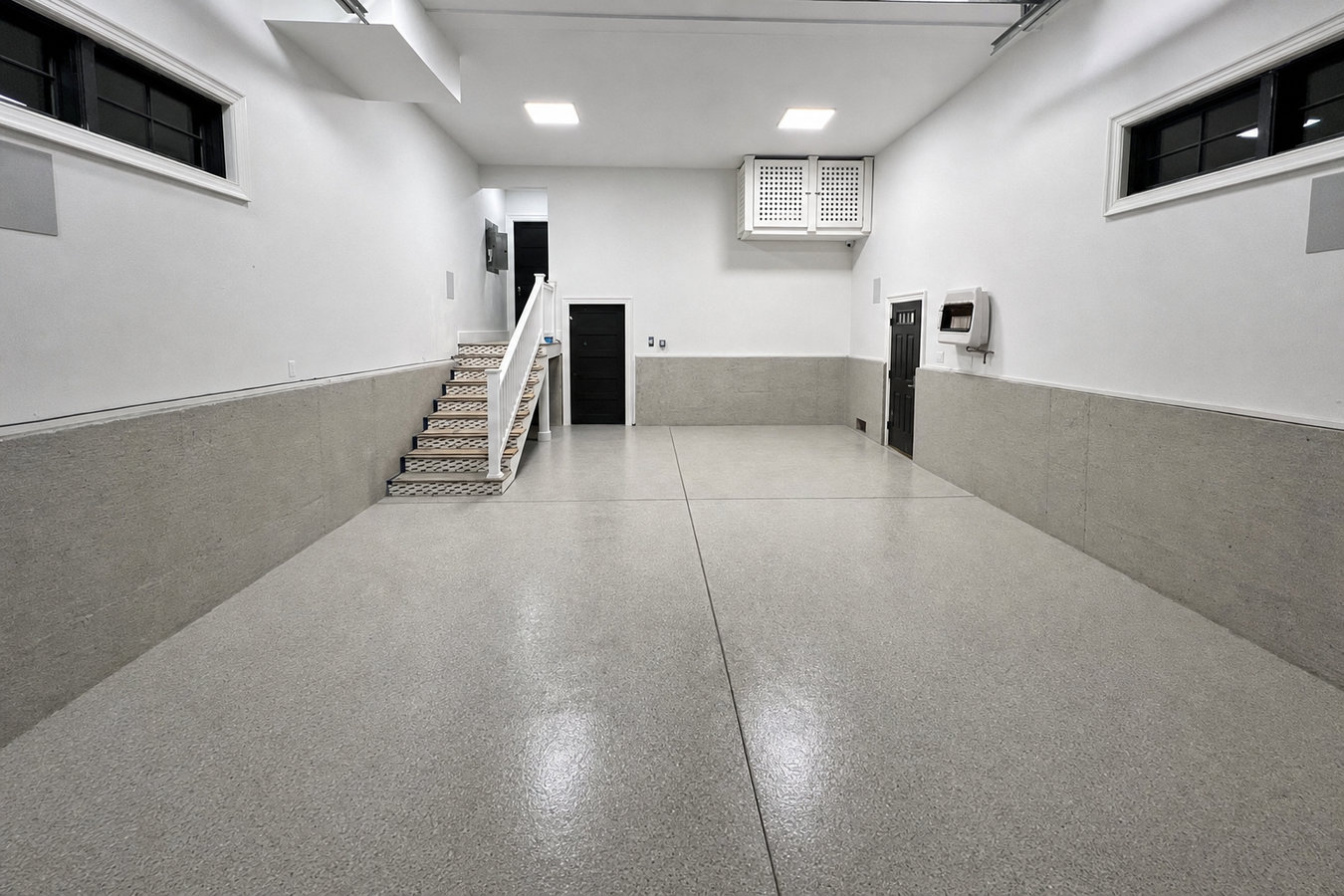
Basement flooring in Visalia starts with the existing concrete slab - whether the finish is epoxy, polished concrete, or a sealed surface, proper prep and moisture testing come first, and most projects complete in two to three working days.
True below-grade basements are less common in California than in other parts of the country, but Visalia does have homes and older properties with below-grade utility spaces, converted rooms, and partial basements where the concrete floor is the starting point for any improvement. The most important thing to understand before choosing a finish is that the condition of that slab determines everything. Moisture vapor moving up through the concrete is the most common reason floor coatings fail. Cracks from the Valley's clay soil movement are the second most common. A contractor who skips testing and prep before applying a finish is setting you up for a floor that fails within a year. If you want to understand what a properly ground and prepared slab looks like before any coating is applied, our concrete grinding and surface preparation page covers that process in detail.
The finish itself matters less than what happens before it goes down. That said, the choice between epoxy and polished concrete is a real one - they suit different uses and aesthetics, and the right answer depends on how you plan to use the space. A utility room has different needs than a gym, workshop, or converted living area.
If you can see cracks running across the slab, chunks that have broken away, or areas where the floor feels noticeably higher or lower than the rest, the surface needs attention before it gets worse. In Visalia, the Valley's clay soils shift with seasonal wet and dry cycles - a common reason older slabs develop these problems over time.
A damp smell in a below-grade space - even if you cannot see standing water - often means moisture is moving up through the concrete. Left alone, that moisture can damage stored belongings, encourage mold growth, and make the space uncomfortable to use. The EPA recommends addressing moisture problems before applying any floor finish.
Bare, unsealed concrete sheds a fine mineral powder that coats everything in the room and never fully goes away with sweeping. A sealed or coated floor stops this completely and makes the space much easier to maintain - something that matters in Visalia where agricultural dust from the surrounding fields comes in through every opening.
If a previous floor coating is lifting at the edges, bubbling in the middle, or flaking off in patches, the original application did not bond properly - often because of moisture or poor surface prep. Recoating over a failing finish will not fix the problem. The old material needs to come off first, and the cause needs to be identified before anything new goes down.
Epoxy coatings and polished concrete are the two most common choices for below-grade spaces in Visalia, and they serve different needs. Epoxy is a thick coating applied over the existing slab - it creates a hard, easy-to-clean surface that holds up to foot traffic, tool drops, and chemical spills in workshops or utility rooms. It comes in a range of colors and finishes, including options with anti-slip aggregate. Polished concrete involves grinding and sealing the slab itself rather than coating over it - the result is a smooth, low-sheen or high-gloss surface that works well in spaces being converted into gyms, offices, or rooms where the floor needs to look finished rather than industrial. For spaces where the slab is in good shape but you want the simplest, most cost-effective option, a properly applied sealer stops dusting and moisture transfer without the cost of a full coating. For those who also want to understand the prep side of this work, concrete grinding and surface preparation is always the first step regardless of which finish you choose.
Crack repair and leveling is often necessary before any finish goes down, especially in older Visalia homes where the clay soils have caused the slab to shift or crack over the years. We treat this as its own step, not a detail to rush past. If your slab has active cracks - meaning cracks that are still moving with the seasons - we will tell you directly rather than fill them and hope the coating hides the problem. For adjacent spaces or surfaces that need a different approach, concrete sealing is another option we install throughout the region.
The most popular choice for utility rooms, workshops, and garages - durable, easy to clean, and available in multiple colors and finishes.
Ideal for below-grade spaces being converted into living areas, gyms, or offices - gives the room a finished, refined look without adding height.
A cost-effective option for utility spaces where appearance is secondary - stops dusting, reduces moisture transfer, and protects the slab.
Standalone prep work for slabs that need structural attention before any finish goes down - often the most important step of the entire project.
Two conditions specific to this area directly affect how below-grade floor work is done and how long it holds up. First, the clay-rich soils across the San Joaquin Valley expand when wet and contract when dry - a seasonal cycle that puts steady stress on concrete slabs and is the leading cause of cracks in Visalia homes. A contractor who has not worked in this climate may not factor that movement into how they approach crack repair before coating. Second, Visalia's extreme summer heat affects how and when coatings cure - the right scheduling around temperature is a practical detail that separates a coating that bonds properly from one that fails in its first summer. The U.S. Environmental Protection Agency provides guidance on moisture and mold in below-grade spaces for homeowners who want to understand the health side of these issues.
Many of the older homes in established Visalia neighborhoods were built in the 1950s through 1980s, and the concrete in those below-grade spaces can be porous, stained, or structurally compromised in ways that newer slabs are not. We have worked on basement floor projects throughout the region, including properties in Hanford and Fresno, and we are familiar with the range of slab conditions you find in Central Valley homes of different ages.
When you reach out, we ask about the size of the space, what condition the floor is in, and how you plan to use the room. We schedule an in-person visit before giving any price - an honest quote cannot be made from a phone call alone. Most Visalia homeowners hear back within 1 business day.
We walk through the space, test for moisture, check for cracks and uneven areas, and walk you through finish options. You receive a written estimate covering prep work, materials, and timeline - this is the right time to ask every question you have.
The crew grinds the slab smooth, fills cracks, and addresses moisture issues before any coating goes down. This typically takes most of the first day. Do not let any contractor skip or rush this step - it is what makes the difference between a floor that lasts and one that fails.
Once the slab is prepped, the finish coat goes on. You will need to stay off the floor for at least 24 hours and wait up to 72 hours before moving furniture back in. Before we leave, we walk through the space with you so you can review the result and flag anything while the crew is still on-site.
We test for moisture and assess cracks before recommending anything. No pressure, no upselling - just an honest look at what your space needs. Hear back within 1 business day.
(559) 820-0443Visalia's seasonal weather can push moisture through concrete slabs in ways that are not visible to the eye. We test for moisture vapor emission before recommending any finish - a step that many contractors skip. Skipping it is one of the most common reasons coatings fail within the first year.
The San Joaquin Valley's clay-heavy soils expand when wet and shrink when dry, putting steady stress on concrete slabs. We assess cracks for movement before filling them, and we will tell you honestly if a slab has issues that need structural attention before any coating makes sense. You get a floor built on a solid foundation, not installed over a problem.
Coatings applied on a slab that is too hot from the Central Valley sun can cure too fast, leaving weak spots or bubbles in the finish. We schedule application during cooler morning hours or recommend spring and fall windows for projects where timing is flexible - a practical step that matters in a climate that regularly exceeds 100 degrees. The American Concrete Institute publishes standards for floor slab construction and finishing that inform how we approach this work.
A straightforward floor coating on an existing slab typically does not require a permit. But if you are converting a below-grade space into a livable room and adding walls, electrical, or plumbing alongside the flooring, permits through the City of Visalia or Tulare County are required. We will tell you clearly which category your project falls into before any work begins.
The floor itself is straightforward - what matters is whether the contractor treats the prep work as seriously as the finish. In Visalia's climate and soil conditions, that is not a detail you can skip and expect the floor to hold up.
The prep work that makes any floor finish last - diamond grinding, crack repair, and slab leveling before a single drop of coating goes down.
Learn MoreA lighter-touch option for utility slabs - stops dusting, reduces moisture transfer, and protects the concrete without the cost of a full coating system.
Learn MoreSpring fills up fast for floor coating projects - reach out now to lock in your date before the heat arrives and scheduling windows narrow.