
Loading...
Serving Visalia, CA and surrounding areas. (559) 820-0443
Carpet wears out. Vinyl fades. Terrazzo - a polished mix of stone, glass, and cement - holds up to Visalia summers, heavy foot traffic, and decades of daily use without buckling, peeling, or losing its finish.
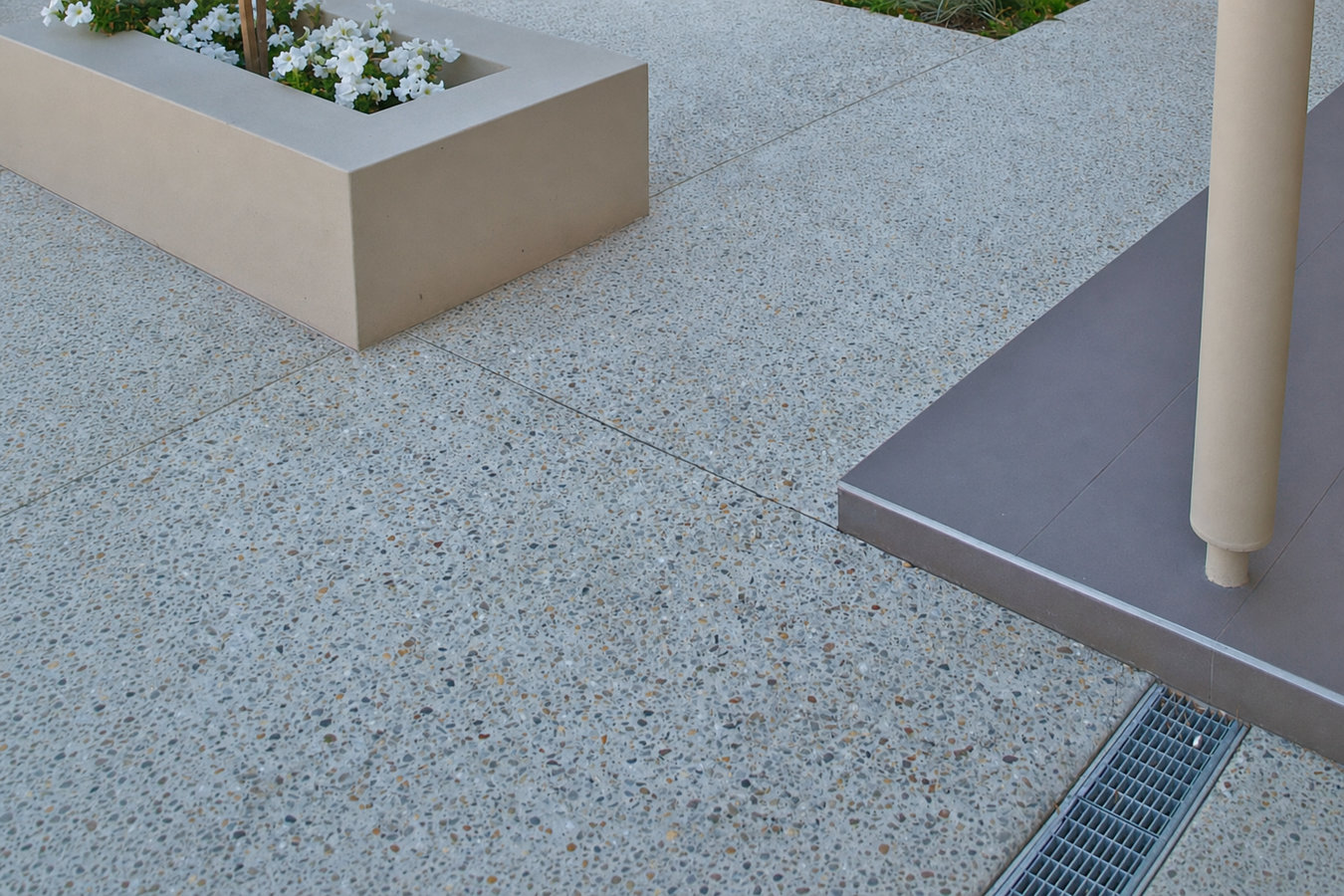
Terrazzo flooring in Visalia is a seamless surface made by embedding chips of marble, glass, or stone into a cement or resin base, then grinding and polishing it smooth - available in new installation or restoration of an existing floor, and most residential projects finish in three to seven days.
For Visalia homeowners, terrazzo has two particularly appealing qualities. First, it is a hard, sealed surface with no grout lines or fibers - which means the agricultural dust that blows through the Central Valley does not settle into it the way it does with carpet or tile. A damp mop handles what sweeping does not. Second, if your home was built before 1975, there is a real chance original terrazzo is hiding under your carpet. Many mid-century Visalia homes had terrazzo installed from the start, and restoration is almost always less expensive than new installation. If you are also considering a smooth, polished look without the aggregate chips, compare with our stained concrete flooring options - they suit different aesthetics and budgets.
The main thing to understand about terrazzo is that it requires a solid, crack-free subfloor to perform well over time. Visalia's clay soils shift with the seasons, which is the most common reason terrazzo floors eventually crack. A proper subfloor assessment before any work begins is what separates an installation that holds up for decades from one that develops problems in a few years.
If your existing terrazzo has lost its shine and looks flat or hazy even after mopping, the sealer has likely worn through. This is common in Visalia homes where floors have gone years without professional maintenance, especially in high-traffic areas like kitchens and hallways. A contractor can regrind and reseal the surface to restore the original luster without replacing the floor.
Many Visalia homes from the 1950s through 1970s had terrazzo installed as the original floor, then covered with carpet during later renovations. If you lift a corner of old carpet and see a hard, speckled surface beneath, you likely have original terrazzo that can be restored. This is one of the most cost-effective flooring discoveries a homeowner can make.
Small cracks in terrazzo are often a sign that the concrete slab underneath has shifted - something that happens gradually in Visalia due to the area's clay-heavy soils expanding and contracting with seasonal moisture changes. Left alone, these cracks can widen and allow moisture beneath the floor. A contractor can assess whether the cracks are cosmetic or structural and recommend the right repair approach.
Terrazzo is stain-resistant when properly sealed, but an unsealed or worn surface will absorb spills - especially oils, wine, and acidic liquids. If you have dark or discolored patches that have not responded to cleaning, the sealer is gone and the stone aggregate has absorbed the stain. Professional grinding can remove the stained layer, and a fresh seal will protect the surface going forward.
We install both cement-based and epoxy-resin terrazzo systems. Cement-based terrazzo is poured directly onto your concrete slab and is the most durable long-term option - it is the right call for new construction, major renovations, and homeowners who want the maximum lifespan. Epoxy-resin terrazzo is thinner and lighter, cures faster, and adds less height to your floor - it suits renovation projects where you cannot raise the floor much and still need to line up with adjacent rooms or thresholds. Both systems produce a similar finished look and can be customized with divider strips, aggregate colors, and pattern designs. For homeowners comparing terrazzo against other decorative options, basement flooring often comes down to a similar choice between a poured system and a coating - we can walk you through the tradeoffs based on your specific space.
Restoration is a significant part of what we do for terrazzo in Visalia. Floors that look dull, stained, or lightly cracked can often be brought back to near-original condition through regrinding and resealing - without tearing out the floor. This is particularly relevant here because a number of mid-century Visalia homes have original terrazzo that has been covered or neglected. If you are unsure whether your existing terrazzo is restorable, an in-person look is the fastest way to find out. We also work alongside stained concrete projects when homeowners want color on adjacent concrete surfaces to complement a restored terrazzo floor.
The traditional system, poured directly onto your slab - extremely durable and the right choice for new construction or major renovation projects.
A thinner, lighter system that cures faster - ideal for renovation projects where floor height and curing time are constraints.
For homeowners with existing terrazzo that has dulled, stained, or cracked - regrinding and resealing brings the original floor back to life at a fraction of replacement cost.
Divider strips in zinc, brass, or aluminum allow for geometric patterns, borders, and logos - suited to entryways, commercial lobbies, and homeowners who want something distinctive.
Visalia's climate pushes most flooring materials harder than homeowners expect. Summer temperatures regularly exceed 100 degrees, and the dry heat causes wood to warp, vinyl to soften, and surface coatings to break down faster than in cooler regions. Terrazzo is unaffected by heat - it stays hard and flat whether it is 75 degrees or 108. For homeowners in homes with west-facing rooms or rooms that get direct afternoon sun through sliding glass doors, that stability makes a real difference. The National Terrazzo and Mosaic Association maintains installation standards and a directory of trained installers for homeowners who want to verify credentials before hiring.
The Valley also produces fine agricultural dust that settles on everything, and terrazzo - a sealed, seamless surface - handles that environment better than most alternatives. We have completed terrazzo projects throughout the region, including homes in Tulare and Exeter, and we are familiar with the slab conditions and soil movement patterns common across this part of the San Joaquin Valley.
When you reach out, we ask about the space, what is currently on the floor, and whether you want new installation or restoration of existing terrazzo. Most Visalia homeowners hear back within 1 business day.
We visit your home to check the subfloor condition, measure the space, and walk through color and design options. You receive a written estimate covering labor, materials, and timeline before any commitment is made.
For new terrazzo, the crew pours and trowels the mixture, sets divider strips, and grinds in progressive stages. For restoration, grinding begins directly on the existing floor. We use wet-grinding methods and vacuums to keep dust to a minimum throughout.
Once ground smooth, a penetrating sealer is applied and allowed to cure - usually 24 hours before light foot traffic and up to 72 hours before furniture returns. We do a final walkthrough with you before leaving and provide written care instructions.
We assess your subfloor in person and check for original terrazzo before recommending anything. Hear back within 1 business day.
(559) 820-0443Visalia's clay soils cause concrete slabs to shift with the seasons, and that movement is the main reason terrazzo floors crack. We assess your slab before pouring or restoring anything - and flag any issues that need to be addressed first. Your floor is built on a solid foundation, not installed over a problem that resurfaces in two years.
Cement-based terrazzo can cure too fast when temperatures climb above 95 degrees, increasing the risk of surface cracking. We plan pours during cooler morning hours or recommend fall and spring timelines for larger projects - a practical detail that matters in a place where summer highs regularly exceed 100 degrees.
Visalia has a significant number of mid-century homes where original terrazzo is hidden under carpet or vinyl. We check before assuming you need new flooring, and if restoration is the smarter call, we say so. Industry installation and restoration standards from the National Terrazzo and Mosaic Association guide our work on both new installs and existing floors.
Terrazzo grinding produces fine silica dust, and the San Joaquin Valley Air Pollution Control District regulates how contractors manage it. We use wet-grinding methods and industrial vacuums on every job - both to follow local rules and to keep your home cleaner during the project.
Terrazzo is a significant investment, and what it comes down to is whether the contractor understands the local conditions - the clay soils, the summer heat, the mid-century housing stock - and builds their process around those realities. That is exactly what we do on every project we take on in the Visalia area.
Transform a raw concrete slab in a below-grade space with a polished, epoxy, or sealed finish that makes the room feel finished and usable.
Learn MorePermanent color bonded into your existing slab - no chips or divider strips, just a smooth, tinted surface that will not peel in Visalia heat.
Learn MoreSpring and fall are the best seasons for terrazzo work in the Valley - our calendar fills up fast during those windows, so reaching out now means no delays on your project.